News from Microsoft Ignite 2025

Microsoft Ignite is an annual event aimed at IT professionals, developers, and Microsoft partners to learn, share ideas, and explore new technologies. It’s designed as a space for practical learning through sessions, workshops, and demos, while also offering opportunities to connect with peers and industry experts.

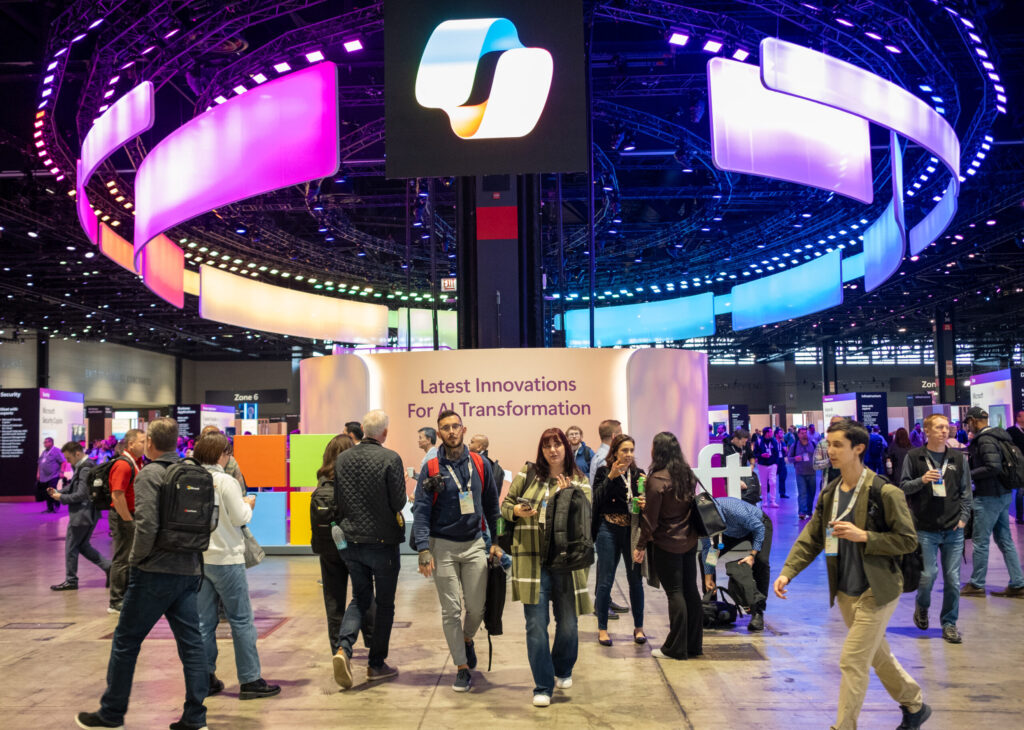
Participants can engage with topics important to their work and gain insights into tools and practices shaping the future of technology. This year’s event didn’t disappoint, neither in numbers – it offered over 400 sessions, demos and labs led by Microsoft and its partners, to more than 17000 attendees – nor in the amount of news, new products and features unveiled at the event. It should come as no surprise that the majority of news revolved, at least to some extent, around AI.
Source: Microsoft

Due to a huge number of announcements across the whole Microsoft portfolio of products and services, we will only focus on two categories that are most important for NIL as a Microsoft partner: Security and Hybrid Cloud.

Microsoft introduced several updates aimed at improving security across identity, threat protection, and data governance. These changes are designed to make security management more consistent and easier to integrate into everyday operations.

Probably the biggest security related announcement was that Security Copilot will now be included with Microsoft 365 E5 licenses at no additional cost. This means organizations using E5 can access AI-driven security capabilities such as incident response, phishing triage, identity risk remediation, and compliance support without separate licensing. Usage is measured through Secure Compute Units (SCUs), allowing customers to scale based on their needs while keeping advanced security tools integrated into their existing subscription.

Microsoft added new features to Entra to strengthen identity controls:

  • Entra Agent ID provides dedicated identities for non-human accounts such as services and automated processes. This includes lifecycle management, credential rotation, conditional access, and audit logging.
  • Conditional Access Policies now apply to machine accounts as well as user accounts, allowing more granular control.
  • Improvements in passwordless authentication and passkey support make secure sign-in simpler for users and administrators.

Updates to Microsoft Defender focus on faster detection and response:

  • The Phishing Triage Agent now handles identity and cloud alerts, reducing manual classification work.
  • Predictive Shielding can block suspicious activity before it escalates.
  • A new Threat Hunting Agent allows natural-language queries for quicker investigations.
  • Integration with Microsoft Sentinel adds protection against attacks targeting third-party services like AWS and Okta.
Source: Microsoft

Microsoft improved DevSecOps workflows through better integration:

  • Defender for Cloud now works with GitHub Advanced Security to link runtime alerts with code-level vulnerabilities.
  • Detected risks automatically create GitHub issues, improving collaboration between developers and security teams.
  • Tools like Copilot Autofix and GitHub Copilot provide guided remediation for faster fixes.

Enhancements to Microsoft Purview help organizations manage sensitive data:

  • Data Security Posture Management (DSPM) automatically identifies sensitive assets and configuration risks.
  • Investigations highlight unusual access patterns and compliance gaps.
  • Monitoring now spans endpoints and cloud workloads for consistent protection.

Apart from security related news, Microsoft also introduced several updates across Azure, Azure Arc, Azure Local, and Windows Server, focusing on hybrid cloud management, security, and performance. These changes aim to simplify operations, improve resilience, and support disconnected and sovereign environments.

First of all, Ignite introduced Azure Copilot as an AI-powered assistant built into the Azure Portal and CLI. It allows administrators and developers to manage cloud resources using natural language commands, automatically generating ARM templates, Bicep scripts, or CLI commands for deployment. Copilot also provides real-time security and compliance insights through Azure Policy and Defender for Cloud, cost optimization recommendations, and hybrid management capabilities via Azure Arc. This integration simplifies complex tasks like provisioning, governance, and automation while maintaining enterprise-grade security and RBAC controls.

Azure

  • Confidential VMs: Virtual machines now support AMD SEV-SNP and Intel TDX technologies for confidential computing. These provide hardware-based memory encryption and isolation, ensuring workloads are protected from hypervisor-level attacks and unauthorized access.
  • AKS Auto-Scaling and Fleet Manager: Cluster Autoscaler Enhancements: Improved scaling logic for large workloads and GPU nodes. Azure Kubernetes Fleet Manager: Enables centralized management of multiple AKS clusters across regions, including policy enforcement and workload distribution.
  • AKS Updates for Specialized Workloads: Support for GPU-enabled nodes for AI/ML workloads and disconnected environments for edge deployments. Includes improved certificate and key rotation for Kubernetes clusters.
  • Vaulted Backups and Smart Tiering: Vaulted Backup: Long-term retention for critical workloads using Azure Backup Vaults. Smart Tiering: Automatically moves data between hot, cool, and archive tiers based on usage patterns to optimize cost and performance.
  • Azure Fabric IQ / Foundry IQ: A unified data and AI management layer that simplifies governance, compliance, and orchestration of large-scale data pipelines across Azure services.
  • Hybrid Cloud Governance Improvements: Expanded Azure Policy and Defender for Cloud capabilities for multi-cloud environments, including compliance checks and security posture management for AWS and GCP resources.

Azure Arc

  • GCP Connector: Azure Arc can now inventory and manage Google Cloud VMs. Authentication uses OIDC federation for security, eliminating the need to store credentials.
  • Automatic Agent Updates: Arc-connected servers can automatically update their agents with rollback and retry options. This feature is configurable via the Azure Portal, CLI, or PowerShell.
  • OS Configuration Editor: A new interface for defining OS-level settings as code and enforcing them across hybrid servers using Machine Configuration policies.
  • AKS Arc Enhancements: Support for disconnected environments and GPU workloads. Integration with Azure Kubernetes Fleet Manager for centralized cluster management. Improved certificate and key management for Kubernetes clusters.
  • Hybrid Azure Virtual Desktop: Azure Virtual Desktop can now run on-premises through Azure Arc, enabling VDI in environments with strict data residency or limited connectivity.

Azure Local

  • Support for Sovereign and Disconnected Clouds: Azure Local now enables deployment in environments with strict data residency or no internet connectivity. It supports GPU workloads, SAN storage, and identity management without requiring Active Directory.
  • NVIDIA GPU Integration: Added support for NVIDIA RTX PRO 6000 GPUs, enabling high-performance computing and AI workloads in disconnected or edge environments.
  • Microsoft 365 Local: Brings Microsoft 365 services to on-premises environments for regulated industries or offline scenarios, ensuring productivity without cloud dependency.
  • Expanded Hardware and Scale Options: Support for larger rack deployments and SAN storage for enterprise-grade performance in private cloud setups.

Windows Server

  • Hotpatching for Windows Server 2025: Apply security updates without rebooting on Azure Arc–connected servers. Requires Virtualization-Based Security (VBS) with Secure Boot and a baseline cumulative update.
  • Azure Update Manager Integration: Centralized patching and update management for hybrid environments, replacing older update management tools.
  • Windows Admin Center “vMode”: A new fabric-style dashboard for managing large Hyper-V clusters (up to 1000 hosts and 25000 VMs). Features RBAC support, parallel operations, and Azure Arc integration.
  • VMware-to-Hyper-V Migration: Agentless migration of up to 10 VMs at once using change-block tracking (CBT). Preserves IP addresses, supports Secure Boot, and clustering without requiring VM modifications.
  • Hyper-V Enhancements: Support for up to 4 PB host memory and 2048 logical processors per VM. GPU-P for shared GPU usage. Workgroup-based clusters without Active Directory (PKU2U). Native Sysmon support for improved monitoring.